
“He checked out our crawl space and came out with pictures and great explanations. Little did I know that our vapor barrier had been damaged and our wood was starting to mold. He was great at explaining the best insulation methods for our crawl space and gave us separate quotes for each of the projects. Their lead time is fantastic, they keep up with their jobs, so you are only waiting a few days after you make your decision.”
Cassie SweetenGoogle ReviewMetal Building Insulation · Northwest Arkansas
Metal building insulation that stops the roof from raining indoors
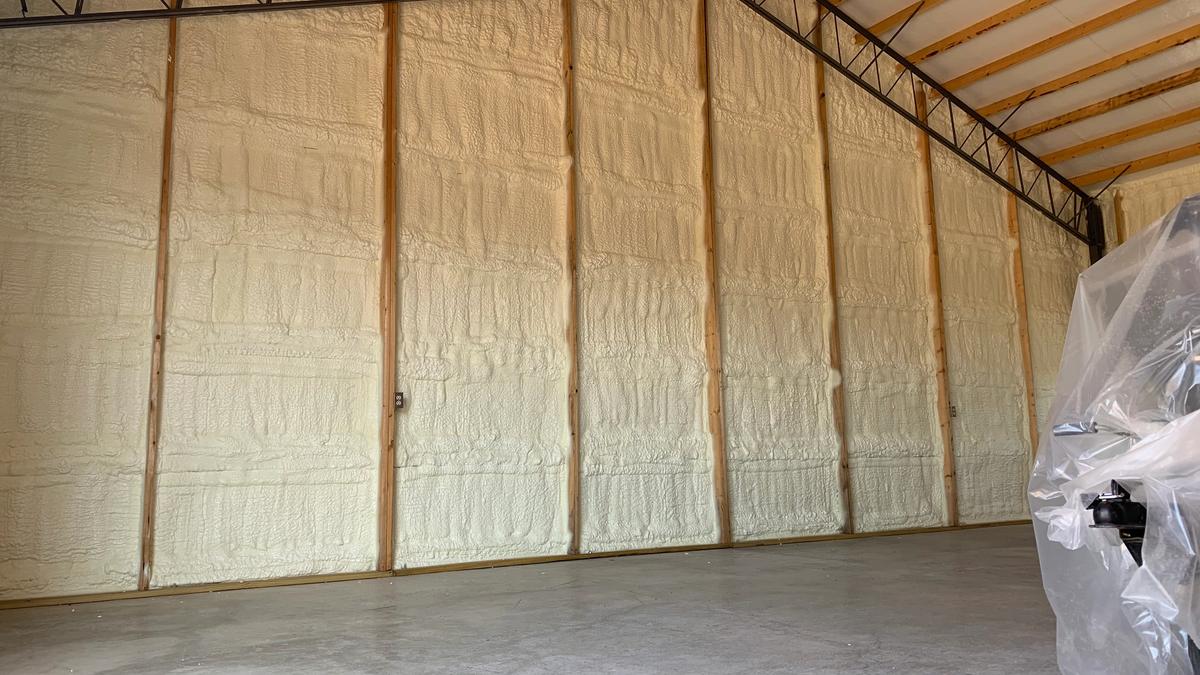
Metal buildings sweat. Warm, humid interior air condenses on cold steel panels, drips onto whatever is stored below, and rusts the building from the inside. Closed cell spray foam stops it at the panel: air seal, vapor retarder, and insulation in a single pass.
What it fixes
- Condensation dripping from the roof deck
- Shops too hot to work in all summer
- Rust and water damage to stored equipment
Why your metal building rains inside
Steel is an excellent conductor, which means a metal roof panel tracks the outdoor temperature almost exactly. On a cool night the panel gets cold fast. Meanwhile the air inside the building carries moisture: from the ground below, from vehicles and equipment, from people working, from the day's humidity that came in every time a door opened.
When that warm, moist interior air touches a panel colder than its dew point, the moisture condenses, exactly like a cold drink sweating in July. On a roof deck the droplets grow until they fall. Owners call it raining inside, and in Northwest Arkansas humidity it can happen most mornings of the year. The water rusts fasteners and panels from the inside, soaks stored materials, drips onto equipment, and keeps the slab damp.
Bare metal buildings and buildings with torn or sagging vinyl-faced batt insulation both do this. Once the moist air can reach cold steel, condensation follows.
Why closed cell foam is the standard answer
The fix is to keep interior air away from the cold panel, and closed cell spray foam does that better than anything else we install because it does three jobs in one pass.
It air seals. Foam bonds directly to the panel and fills the ribs, laps, and fastener penetrations that batts bridge over, so moist air simply cannot reach the steel.
It is a vapor retarder in its own right. Closed cell foam at the thickness a metal building calls for stops vapor drive through the assembly, with no separate facing to tear, sag, or fall out of the ribs the way vinyl-faced blanket insulation eventually does.
And it stiffens the building. Closed cell foam cures rigid and bonds to the panel, which adds noticeable rigidity to metal skins and cuts panel drum and rattle in wind.
The same pass insulates the building, which is why a foamed shop is workable in July and holds heat in January instead of shedding it through bare steel.
Shops, barns, ag buildings, warehouses
Most of our metal building work is shops and garages that someone wants to actually use year round, barns and agricultural buildings protecting equipment or animals from condensation drip, and warehouses where dripping water is an inventory problem before it is a comfort problem. The same assembly logic covers all of them. For offices, framed walls, and larger spec-driven projects, our commercial insulation page covers the wider toolkit.
Retrofit or new build
New builds are the easy case: the frame is up, the panels are on, and the foam goes on before anything is stored inside. If you are planning a shop around Springdale or anywhere else in the metro, insulating before move-in is cheaper and cleaner than working around a full building later.
Retrofits are most of what we do, and they are very workable. The building needs to be prepped: old blanket insulation comes down where it is failing, surfaces need to be dry and reasonably clean for the foam to bond, and stored contents get moved or masked. We tell you exactly what needs to happen before spray day when we walk the building.
What the install involves
We inspect first and put a scope in writing: which surfaces, what thickness, and what prep is included. On install day the crew masks anything staying in the building, sets up ventilation, and sprays the panels in controlled passes to the specified thickness. Most single-building jobs run one to two days, and you will need to stay out of the space during application and the cure window, which we state in writing before we start.
The honest limits
Foam is not the whole answer for every metal building. A sealed building still needs ventilation planned for what happens inside it; welding, vehicle exhaust, and livestock all produce moisture and fumes that have to leave somehow, and sealing the envelope without thinking about air change trades one problem for another. And if your main complaint is radiant heat load on a west-facing wall of glass or a bay door that stands open all day, insulation helps but will not solve it alone. We will tell you which situation you have during the walkthrough rather than sell foam at every problem.
Get a written price for your building
The free estimate works the same for a shop as for a house: we walk the building, measure it, and hand you a written scope and a firm price. If your building rains inside, that is the first step to making it stop.
Not sure what your house needs? One call, one honest answer.
Where we install it
Serving all of Northwest Arkansas
We take this work everywhere we install residential, from our Bentonville shop.
Also from WeatherGuard
- Spray Foam InsulationOpen and closed cell foam for attics, walls, metal buildings, and new construction. Seals air leaks and insulates in one pass.
- Blown-In FiberglassThe most cost-effective way to bring an under-insulated attic up to today's recommended R-value, usually in a single day.
- Crawl Space EncapsulationRemediation and encapsulation: vapor barrier, sealing, and conditioning that turn a damp crawl space into a dry, clean part of your home's envelope.
- BIBS Wall InsulationBlown fiberglass behind a fabric membrane for wall cavities. Denser than batts, better R-value, better sound control.
- Fiberglass Batt InsulationPrecut fiberglass panels for open walls, floors, and ceilings. A tried and true product that has been around for decades, sized right for the cavity.
- Commercial InsulationSpray foam, BIBS, and blown-in systems for warehouses, shops, offices, and churches. Written scope, firm schedule, to spec.
111 five-star Google reviews
What neighbors say
“Hunter is a very hard-working man, and you guys do awesome work! I’d highly recommend this company!”
Jaden McfallGoogle Review“They did a great job on my 400 sqft project, in which I spray foamed. Priced well and they communicated well. Thanks!”
Jason GroteGoogle ReviewStraight answers
Metal Building Insulation questions
What homeowners ask before we start.
Why does my metal building rain inside?
Steel panels track the outdoor temperature, so on cool nights they drop below the dew point of the warmer, moist air inside the building. That moisture condenses on the cold metal, collects, and drips. It is condensation, not a roof leak, and the fix is keeping interior air off the cold panel.
What insulation is best for a metal shop in Arkansas?
Closed cell spray foam, in most cases. It bonds directly to the panels, air seals the ribs and laps, acts as a vapor retarder, and adds rigidity to the metal skin, all in one pass. That combination stops condensation at the source, which is the problem metal shops in this climate actually have.
How much does it cost to insulate a metal building?
It depends on the size of the building, the thickness of foam it needs, and the prep involved: failing blanket insulation comes down, surfaces need to be dry and reasonably clean, and stored contents get moved or masked. We walk the building and put the scope in writing, covering which surfaces, what thickness, and what prep is included, with a firm price. Every estimate is free and in person.
Should a metal building be insulated during construction or after?
During, if you can. On a new build the frame is up and the panels are on, so the foam goes on before anything is stored inside, which is cheaper and cleaner than working around a full building later. Retrofits are most of what we do and are very workable, though failing blanket insulation may need to come down and contents moved or masked first.
Will spray foam stop condensation in a metal building?
Closed cell spray foam stops it at the source. It bonds to the panel, fills the ribs, laps, and fastener penetrations, and acts as a vapor retarder, so moist interior air cannot reach the cold steel. It is not the whole answer for every building, though. Welding, vehicle exhaust, and livestock produce moisture and fumes that still need somewhere to go, and we tell you which situation you have during the walkthrough.
Shop, barn, or warehouse? Get it insulated right the first time.
One call. One honest estimate. A family standing behind the work.