
“He checked out our crawl space and came out with pictures and great explanations. Little did I know that our vapor barrier had been damaged and our wood was starting to mold. He was great at explaining the best insulation methods for our crawl space and gave us separate quotes for each of the projects. Their lead time is fantastic, they keep up with their jobs, so you are only waiting a few days after you make your decision.”
Cassie SweetenGoogle ReviewCrawl Space Encapsulation · Northwest Arkansas
Crawl space encapsulation that turns a damp crawl space into part of the house
A vented dirt crawl space pulls humidity straight into your home. Crawl space remediation and encapsulation seal it with a heavy vapor barrier, close the vents, add crawl space insulation on the foundation walls, and bring the space inside the building envelope. Musty smells, cold floors, and humidity that will not drop are the symptoms it fixes.
What it fixes
- Musty smells and humidity indoors
- Cold floors in winter
- Mold, pests, and sagging ductwork below
The air in your crawl space is the air in your house
The instinct is to treat a crawl space as outside. It is under the house, it has vents, nobody goes down there. In practice it is connected to the living space in a way most homeowners are never told about.
Warm air rises and escapes through the upper part of a house, and the air that replaces it gets drawn in from the lowest point available. In a home over a vented crawl space, that means a meaningful share of the air you breathe upstairs entered through the crawl space first. Whatever is down there, the humidity, the smell, the mold spores, comes up with it.
That is why a musty odor on the ground floor so often traces back to a crawl space nobody has looked at in years, and why it does not respond to cleaning.
Why the vents make it worse here
Crawl space vents were code for decades on the theory that outside air would carry moisture away. In a humid climate that logic runs backwards for much of the year.
On a summer day in Northwest Arkansas, outside air can be 90 degrees and heavily humid. The crawl space, shaded and in contact with the ground, sits much cooler. Pull that warm humid air into that cool space and it hits its dew point and condenses, on the ductwork, on the joists, on the subfloor. The vents that were supposed to dry the space are actively wetting it.
Add ground moisture evaporating up from bare dirt, which continues year round, and the result is a space that stays damp enough for mold and attractive to pests.
What encapsulation actually involves
Encapsulation is a system, and skipping steps is what separates a job that lasts from one that fails in two years.
- Clear the space and address what is already there. Debris comes out. Any existing mold gets remediated rather than sealed over. Standing water means a drainage problem that has to be solved first.
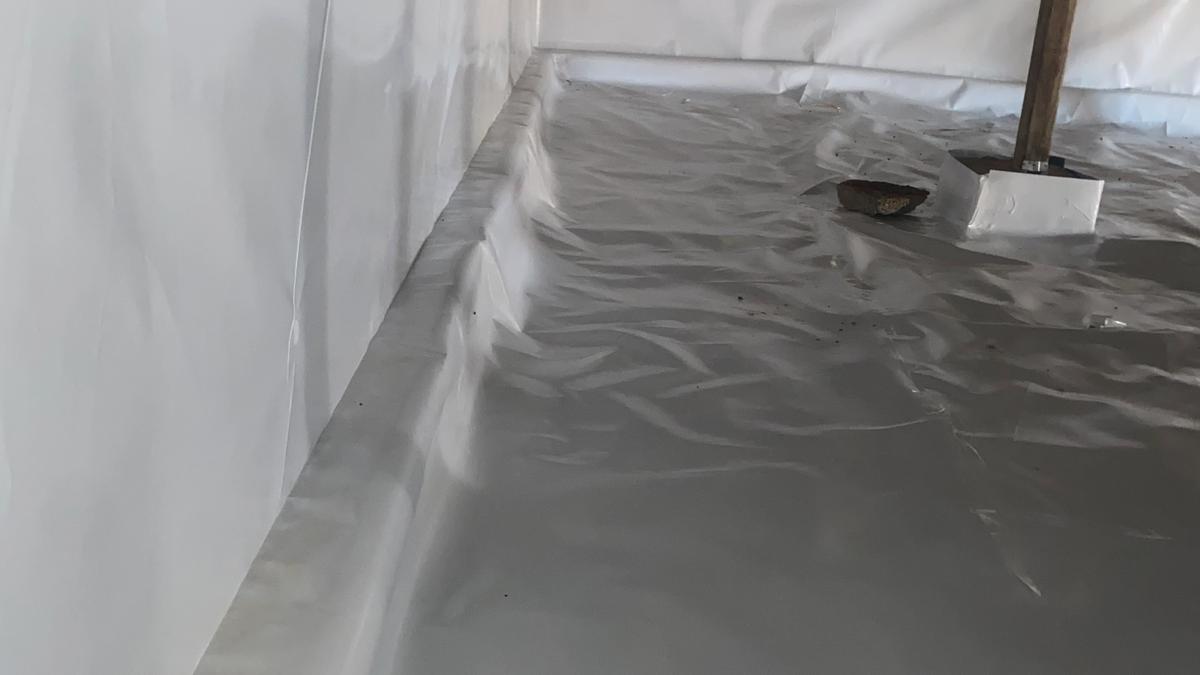
- Seal the ground with a heavy reinforced vapor barrier, run up the foundation walls and mechanically fastened, with seams overlapped and sealed. This is the layer that stops ground moisture, and it is where thickness and proper termination matter.
- Close the vents. Once the space is sealed, outside air is the problem rather than the solution.
- Insulate the foundation walls, typically with closed cell foam, which brings the crawl space inside the thermal envelope instead of leaving it as a cold buffer under your floor.
- Condition and control humidity, usually with a dedicated dehumidifier sized for the space. A sealed crawl space still needs its moisture managed.
The cold floor problem
Cold floors in winter are one of the most common reasons homeowners call us, and the fix is not usually more floor insulation.
In a vented crawl space, the air directly under your subfloor is close to outdoor temperature all winter. Insulation between the joists slows that down but does not stop it, particularly since batts installed under a floor tend to sag and fall away over time, which is one of the most frequent conditions we find.
Encapsulation changes the situation rather than resisting it. Seal the space, insulate the walls, and the crawl space stays within a reasonable range of the house temperature. The floor above stops being a heat sink.
Ductwork benefits for the same reason. Most homes here run HVAC ducts through the crawl space, and any duct passing through an unconditioned space is losing energy to it constantly. Bringing the space inside the envelope means the ducts are no longer fighting the environment around them.
Crawl space insulation alone or the full system
Crawl space insulation is one step of encapsulation, not a substitute for it. If the inspection finds a space that is dry and staying dry, insulating it may genuinely be all the house needs, and we will quote it that way. If there is moisture, insulation installed into a damp space fails the way the sagging batts we find under so many older homes already have. The moisture has to be handled first, which is what the rest of the system exists to do.
What to expect
Most crawl space encapsulations run two to three days depending on size, access, and moisture conditions. Fourteen separate Google reviews mention our crawl space inspections specifically, which is the part we would point to first: the inspection tells you what is actually going on down there, with photographs, before anyone quotes you anything.
If the inspection shows your crawl space is dry and the vapor barrier is intact, that is what we will tell you. Sometimes the right answer is smaller than encapsulation, like closed cell foam on the rim joists, or the real problem is upstairs and what the house needs is attic insulation. The free estimate is where that gets sorted honestly.
Crawl space work takes us all over Northwest Arkansas, and the older homes around Fayetteville and Rogers are where we find the vented dirt crawl spaces this service was made for.
Not sure what your house needs? One call, one honest answer.
Where we install it
Crawl Space Encapsulation across Northwest Arkansas
We install crawl space encapsulation throughout the region. Pick your city for local detail, or call (479) 271-9411 and we will tell you what your home needs.
- Crawl Space Encapsulation in BentonvilleCity guide
- Crawl Space Encapsulation in FayettevilleCity guide
- Crawl Space Encapsulation in RogersCity guide
- Crawl Space Encapsulation in SpringdaleCity guide
- Crawl Space Encapsulation in Bella VistaLocal page
- Crawl Space Encapsulation in Cave SpringsLocal page
- Crawl Space Encapsulation in CentertonLocal page
- Crawl Space Encapsulation in LowellLocal page
- Crawl Space Encapsulation in Siloam SpringsLocal page
Also from WeatherGuard
- Spray Foam InsulationOpen and closed cell foam for attics, walls, metal buildings, and new construction. Seals air leaks and insulates in one pass.
- Blown-In FiberglassThe most cost-effective way to bring an under-insulated attic up to today's recommended R-value, usually in a single day.
- BIBS Wall InsulationBlown fiberglass behind a fabric membrane for wall cavities. Denser than batts, better R-value, better sound control.
- Fiberglass Batt InsulationPrecut fiberglass panels for open walls, floors, and ceilings. A tried and true product that has been around for decades, sized right for the cavity.
- Commercial InsulationSpray foam, BIBS, and blown-in systems for warehouses, shops, offices, and churches. Written scope, firm schedule, to spec.
- Metal Building InsulationClosed cell spray foam for shops, barns, and warehouses. Stops panel condensation, cuts summer heat, stiffens the structure.
111 five-star Google reviews
What neighbors say
“Hunter is a very hard-working man, and you guys do awesome work! I’d highly recommend this company!”
Jaden McfallGoogle Review“They did a great job on my 400 sqft project, in which I spray foamed. Priced well and they communicated well. Thanks!”
Jason GroteGoogle ReviewStraight answers
Crawl Space Encapsulation questions
What homeowners ask before we start.
How much does crawl space encapsulation cost?
Price depends on the size of the crawl space, how much moisture and debris is already down there, and how much of the system the space needs: vapor barrier, sealed vents, insulated foundation walls, and humidity control. If the inspection finds a dry space that only needs insulation, we quote it that way. Every estimate is free, in person, and in writing.
Do I need to encapsulate my crawl space or just insulate it?
If the crawl space is dry and stays dry, insulation alone may be enough. If you have musty odors, visible moisture, sagging insulation, or humidity you cannot control upstairs, insulation alone will not hold. The inspection tells you which situation you are in, at no cost.
Will encapsulation fix the musty smell in my house?
In most cases yes, because a musty ground floor usually traces to crawl space air being drawn upward into the living space. Sealing the ground, closing the vents, and controlling humidity removes the source. If the odor has another cause, the inspection should find it first.
What is the difference between crawl space remediation and encapsulation?
Remediation deals with what is already wrong down there: debris comes out, existing mold is cleaned up rather than sealed over, and standing water gets solved first. Encapsulation is the system that keeps the space dry afterward: a heavy vapor barrier over the ground and up the foundation walls, closed vents, insulated walls, and humidity control. We do both as one job, in that order.
How long does crawl space encapsulation take?
Most crawl space encapsulations run two to three days, depending on size, access, and moisture conditions. Existing mold or standing water has to be dealt with before the rest of the system goes in, and we account for that in the timeline. You get a firm timeline in writing with your estimate.
Will I need a dehumidifier after encapsulation?
Usually, yes. A sealed crawl space still needs its moisture managed, so the system typically includes a dehumidifier sized for the space. The vapor barrier stops ground moisture and closing the vents stops humid outside air, and the dehumidifier keeps humidity under control from there. The written scope tells you what your space calls for.
Your house is leaking money. We have been fixing that since 1996.
One call. One honest estimate. A family standing behind the work.